
Costs
How much does a block paving driveway cost in Barnsley?
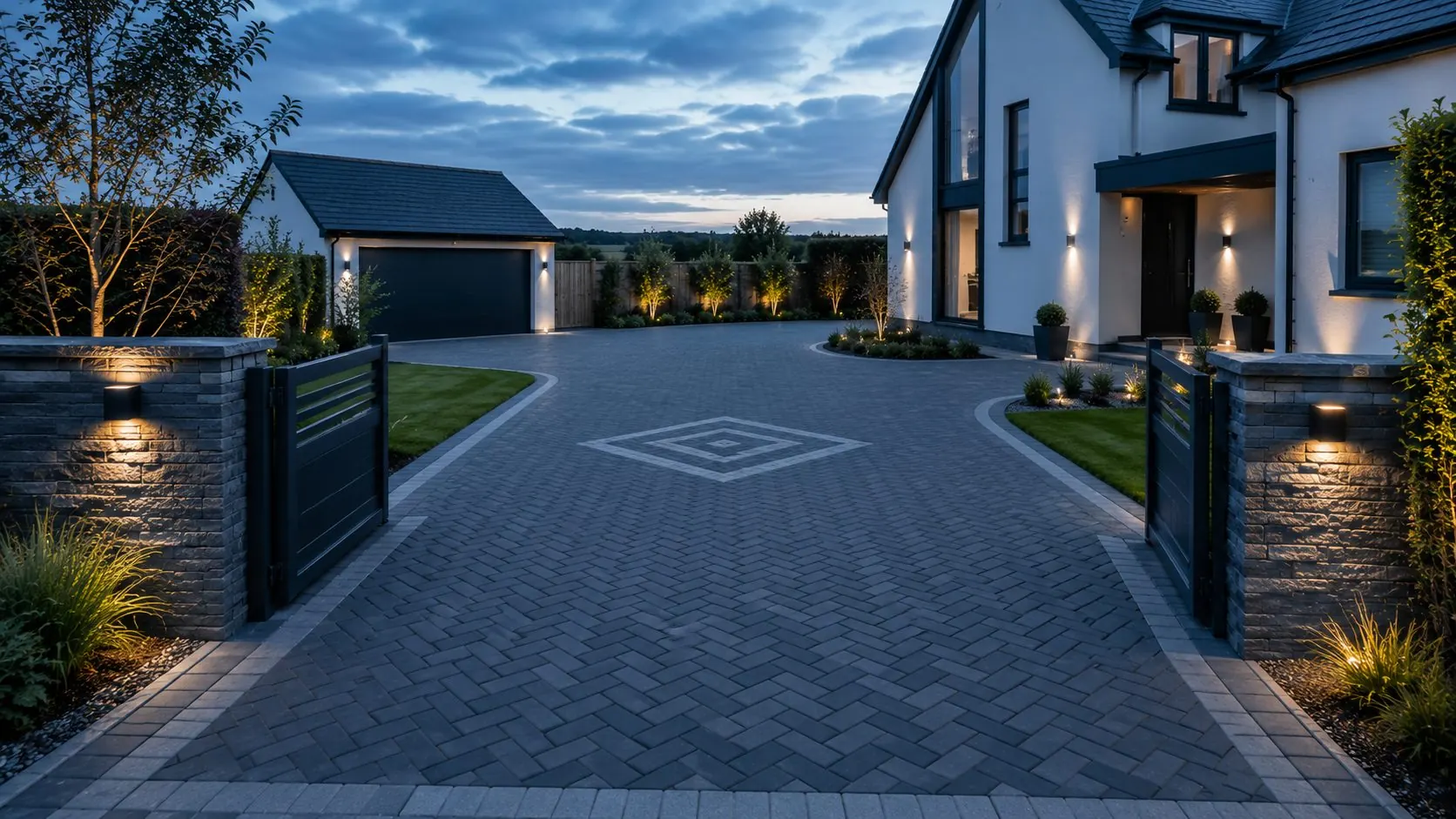
A typical driveway we lay in Barnsley works out somewhere between £6,000 and £7,000. That is a useful number to start from and a bad one to plan around, because two drives of exactly the same size can be £3,000 apart before anyone has argued about the colour of the blocks.
Here is what actually sits behind the figure, in the order it matters.
1. How big it is, and why bigger is cheaper per metre
Everything starts with the area. A single-car drive in Cudworth is usually somewhere around 25 to 30 square metres. A double with a turning area at a house in Wombwell or Royston is often 45 to 60.
What surprises people is that the price per square metre falls as the drive gets bigger. The reason is simple: a lot of what you pay for on day one has nothing to do with area. Getting the machine and the team to your house, setting up, cutting the old surface back at the edges, carting away, protecting the path and the road — that cost is nearly the same whether the drive is 20 metres or 80.
So a 100 square metre drive does not cost four times a 25 square metre one. On our own rates it comes out about 25 per cent cheaper per square metre at that size.
The same logic runs the other way, and it is worth knowing before you ring round: a very small job does not get very cheap. Below about 10 square metres you are buying a day of a team's time and a pallet of materials, and neither of those halves because your patio did. A team-day is a team-day. If someone quotes you £400 for a small paved area, ask what they are leaving out.
2. What is on the ground right now
This is the line that moves quotes the most, and the one most often missed over the phone.
Laying onto bare earth or grass is the cheapest start, because the digging that has to happen anyway is part of laying the drive. Taking up something that is already there is extra machine time and extra weight going to the tip — and different surfaces come up very differently.
| What is there now | Roughly what it adds |
|---|---|
| Grass or bare earth | Nothing extra, the dig is part of the job |
| Old block paving or slabs | About £25 per m² |
| Old tarmac | About £30 per m² |
| Old concrete | About £50 per m² |
Concrete is the expensive one, and reinforced concrete more so. It has to be broken out, and it is heavy, so you pay twice: once to break it and once to take it away. On a 50 square metre double drive, coming off old concrete rather than grass adds roughly £2,000.
There is one more thing that moves this line sharply: access. If a machine can reach the drive, the dig is quick. If the only way in is through a narrow gate or a shared alley, it becomes a hand dig, and that puts the cost of taking up the old surface up by half. On bare earth there is nothing to take up, so it barely shows; on an old concrete drive with no access it is well over a thousand pounds. It is worth saying when you ask for a price, because a quote given without seeing the access is a quote that may change.
3. Which surface you choose
The surface changes the material cost and the time it takes to lay. As a guide, all in and fitted, on a normal domestic job:
- Block paving — about £130 to £200 per square metre. Hard-wearing, and if a section ever settles or a pipe has to come up, you lift the blocks and relay them. Nothing else on this list repairs invisibly.
- Tarmac — about £80 to £95 per square metre. Quick, seamless, and the cheapest way to cover a large area properly.
- Indian stone — about £135 to £205 per square metre. More common on patios than on drives.
- Porcelain — about £155 to £245 per square metre. The dearest, and the flattest, sharpest finish you can buy. It does not fade and it does not stain.
- Artificial grass — about £55 to £65 per square metre. Usually laid alongside a drive rather than instead of one.
Torn between the first two? We have put block paving and tarmac side by side, including when tarmac is the better choice, in block paving or tarmac: which is better for your driveway?
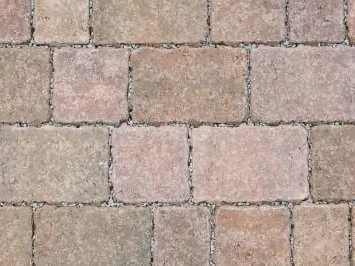
That spread inside block paving is not vagueness, it is a real choice. A standard block and a tumbled or textured one differ by more than double on the material line alone. It is the easiest place to move a quote up or down once the groundwork is settled, and it is worth seeing both before you decide.
4. The bits that are easy to leave out of a quote
Two drives can be quoted at very different prices because one of them quietly does not include:
- Edge restraints, haunched in concrete. Block paving without a proper edge spreads. It does not fail in the first winter, it fails in the third.
- A proper sub-base, at the right depth for what will drive on it. Nobody ever sees this part, and it is the only part that decides whether the drive is still flat in ten years.
- Drainage. Since 2008, a new front garden drive over five square metres has to either use a permeable surface or drain within your own boundary rather than running onto the pavement. If a quote has no answer for where the water goes, it is not finished.
- Taking the spoil away. Ask whether it is in the price, or whether a skip appears on your bill later.
None of these are upsells. They are the difference between a drive that lasts and one that looks excellent for two summers.
So what should you actually pay?
Putting it together, for a new block paving driveway laid properly on a normal domestic job in Barnsley:
| The job | Area | Standard block | Premium block |
|---|---|---|---|
| Single drive, onto grass or bare earth | 25 to 30 m² | £3,650 to £4,300 | £5,050 to £6,000 |
| Double drive, onto grass or bare earth | 45 to 60 m² | £6,050 to £7,750 | £8,550 to £11,100 |
| Double drive, taking up an old concrete one | 50 to 60 m² | £8,700 to £10,250 | £11,500 to £13,600 |
Those are ranges, not quotes. The only number that means anything is the one written down after somebody has stood on your drive and looked at it.
Three questions worth asking anyone who quotes you
- What depth is the sub-base, and what is going in it? A confident, specific answer here tells you more about a firm than a portfolio does.
- Where does the water go? See above. There is a right answer, and it is specific to your property.
- What is the guarantee, and is it written down? Ours is a ten-year workmanship guarantee, in writing, in the contract you sign. A guarantee that only exists as something said at the door is not a guarantee.
Getting a real number
We give a fixed price in writing after a site visit. The visit is free and carries no obligation — there is nothing to pay and nothing to sign to have someone come and look at it.
If you want a sense of the figure before that, the estimate tool on this site emails you an indicative range, worked out from the surface, the area and what is on the ground now. There is more on how it works. It is genuinely indicative rather than a quote: it cannot see your access, your levels, or what is under the surface. But it runs on the same rates we price real jobs with, so it will not be wildly out.
We cover Barnsley and about 30 miles around it — Cudworth, Wombwell, Royston, Darfield, Hoyland, Monk Bretton, and out towards Wakefield and Rotherham.